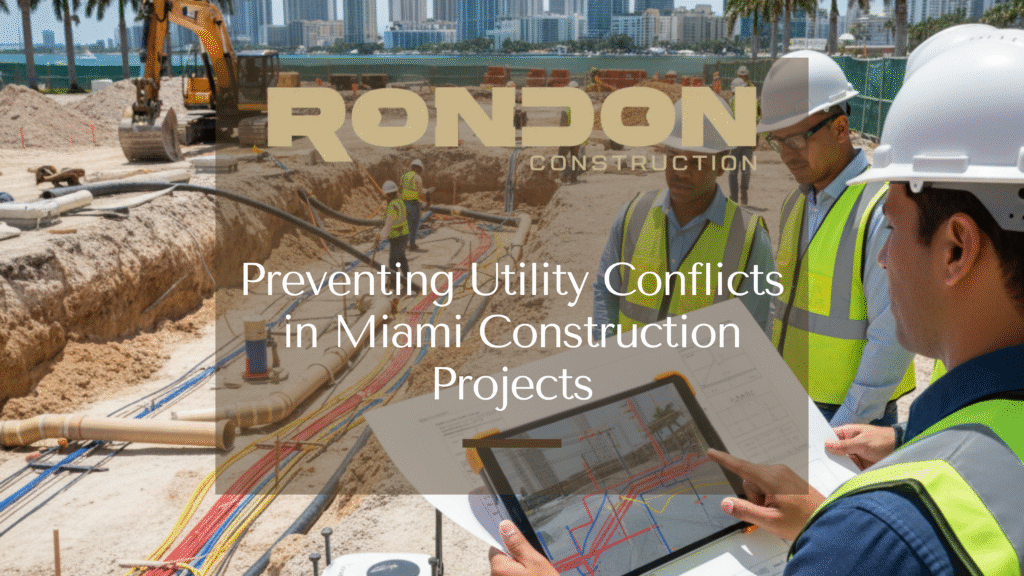
Construction in Miami, Florida, presents unique challenges, from dense urban layouts and underground utility networks to strict city regulations. Among these challenges, utility conflicts stand out as one of the most common causes of costly delays, safety hazards, and project overruns. Whether you’re managing a new commercial development or a residential project, preventing utility conflicts is essential for maintaining schedules, budgets, and worker safety.
In this blog, we’ll explore the importance of identifying and managing utilities early in the construction process, common causes of conflicts, and best practices that Miami builders can use to keep their projects on track.
What Are Utility Conflicts?
A utility conflict occurs when construction activities interfere with existing underground or overhead utilities, such as:
- Water and sewer lines
- Gas pipelines
- Electrical conduits
- Fiber optic cables
- Stormwater drains
- Communication lines
These conflicts typically arise when project designs do not account for existing utility locations or when excavation work uncovers unmarked or inaccurately mapped lines. In Miami’s dense infrastructure network, where both public and private utilities overlap, these issues are especially common.
Why Utility Conflicts Are a Big Deal in Miami
The City of Miami and surrounding areas like Coral Gables and Miami-Dade County are undergoing rapid development. New residential towers, road expansions, and commercial projects are constantly breaking ground, often near existing underground systems that date back decades.
Failing to prevent utility conflicts can lead to:
- Project Delays: Time lost in identifying, relocating, or repairing utilities.
- Cost Overruns: Emergency repairs and redesigns can increase budgets dramatically.
- Safety Risks: Damaged electrical or gas lines can lead to fires, explosions, or electrocution.
- Service Interruptions: Utility outages can affect nearby homes, businesses, and public infrastructure.
- Legal and Regulatory Penalties: Violating local dig laws or failing to coordinate with utility owners can result in hefty fines.
Common Causes of Utility Conflicts
Several factors contribute to utility conflicts in Miami construction sites:
- Inaccurate Utility Maps: Outdated or incomplete records make it difficult to locate lines correctly.
- Poor Communication: Lack of coordination between contractors, designers, and utility companies.
- Rushed Planning: Starting excavation without thorough subsurface investigations.
- Changes During Construction: Redesigns or equipment modifications that interfere with utility corridors.
- Lack of 3D Utility Modeling: Relying solely on 2D plans often leads to misinterpretation of depth and location.
The Importance of Early Utility Coordination
The best way to prevent utility conflicts is through early detection and collaboration. Utility coordination should begin during the design phase, not after construction starts.
Here’s how Miami contractors can integrate early utility coordination:
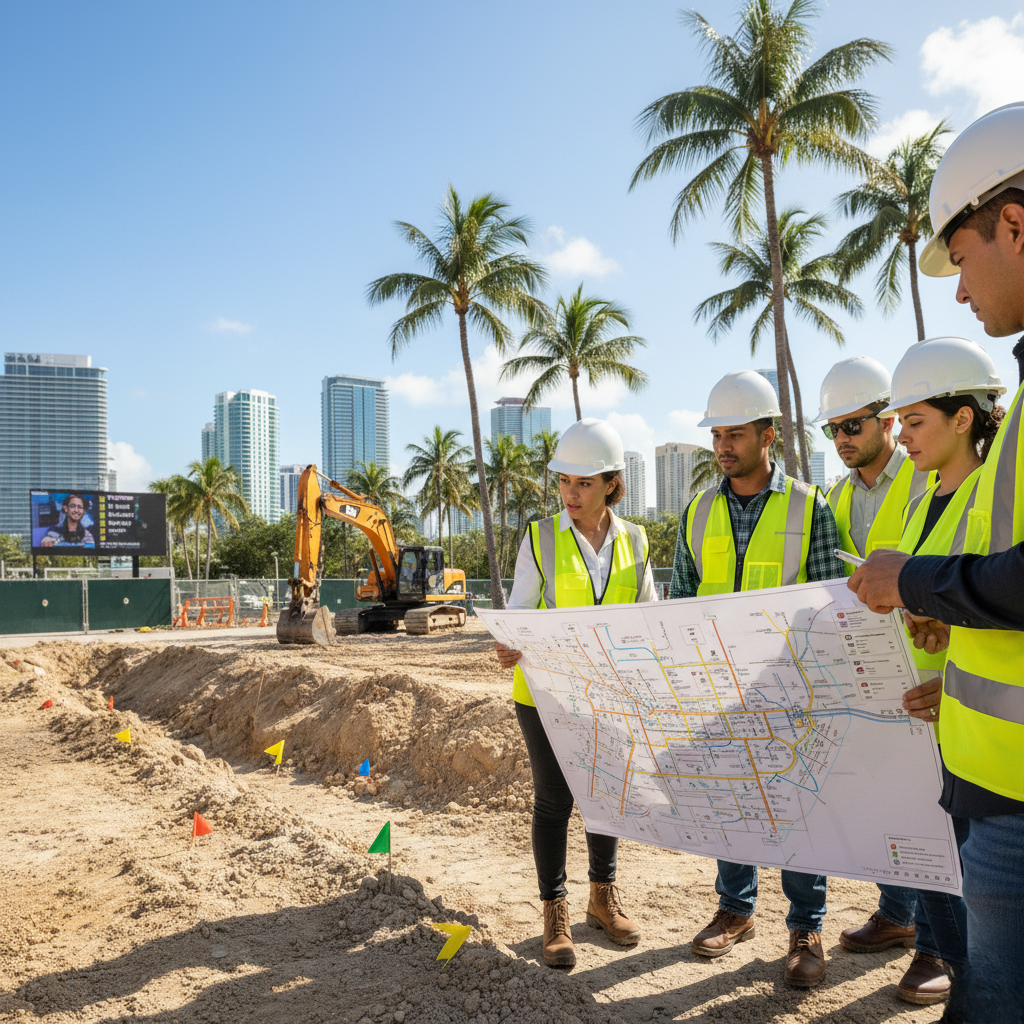
- Conduct a Utility Survey: Use a combination of GIS data, city records, and ground-penetrating radar (GPR) to identify existing utilities.
- Contact Utility Providers: Coordinate with all local utility owners, including FPL, AT&T, Miami-Dade Water and Sewer, and Comcast, to verify locations and service timelines.
- Develop a Utility Coordination Plan: Outline procedures for identifying, relocating, or protecting utilities before excavation begins.
- Include Utility Data in Design Drawings: Incorporate accurate utility layouts into BIM (Building Information Modeling) systems.
Technology That Helps Prevent Utility Conflicts
Modern construction in Miami relies heavily on technology-driven solutions to minimize risk.
1. Ground-Penetrating Radar (GPR)
GPR provides precise imaging of underground utilities without excavation. It’s particularly effective in Miami’s sandy soils, where visual cues are minimal.
2. Subsurface Utility Engineering (SUE)
SUE involves classifying and mapping underground utilities based on accuracy levels (A through D). It helps contractors make informed decisions and reduce unexpected conflicts.
3. BIM Integration
Using BIM software, engineers can visualize utility networks in 3D, allowing them to design construction plans that avoid interference.
4. GIS Mapping Tools
Geographic Information Systems (GIS) offer comprehensive data on public utility lines, helping contractors plan around existing systems.
Miami’s “Call Before You Dig” Requirements
In Florida, it’s mandatory to contact Sunshine 811 before any excavation work begins. This state-wide program allows contractors to notify utility owners at least two full business days before digging.
Steps include:
- Submit a location request through Sunshine 811.
- Waiting for utility representatives to mark underground lines using color-coded paint.
- Proceeding with excavation only after confirmation.
Failure to comply with Sunshine 811 regulations can lead to civil penalties, service disruption costs, and liability for any damage caused.
Best Practices for Avoiding Utility Conflicts in Miami Construction
- Invest in Pre-Construction Utility Surveys – Identify and document all underground and overhead utilities.
- Engage in Utility Coordination Meetings – Keep regular communication between project teams and utility owners.
- Implement Real-Time Utility Tracking – Use mobile apps and GPS mapping to track updates as construction progresses.
- Train Field Crews – Ensure workers understand how to interpret utility markings and respond to unplanned encounters.
- Schedule Utility Relocations Early – If relocation is required, plan well in advance to avoid project delays.
- Monitor Excavation Carefully – Always have a utility spotter or observer present during digging.
Case Example: Utility Coordination in Downtown Miami
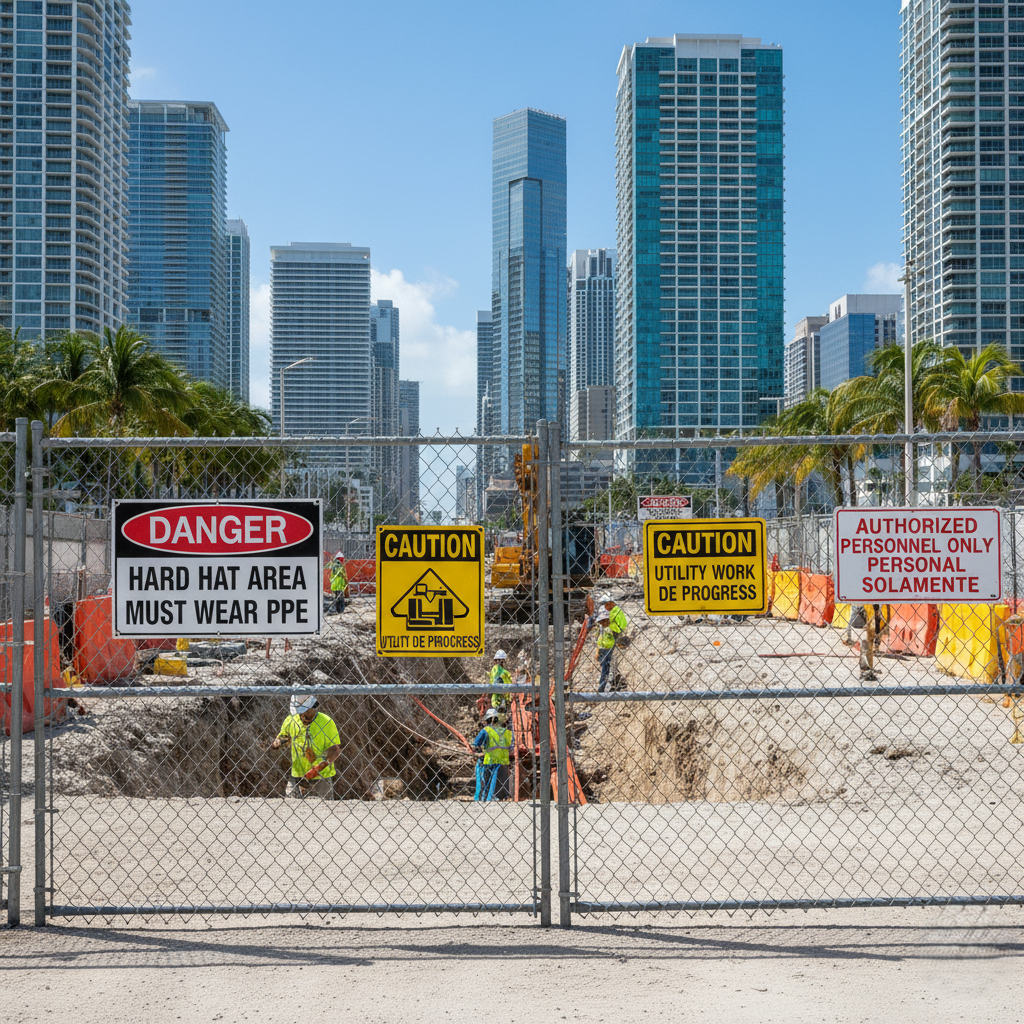
In recent redevelopment projects across Downtown Miami, construction teams faced significant challenges due to overlapping water mains and fiber optic cables. Through the use of SUE mapping, GPR technology, and coordinated planning with Miami-Dade County, contractors successfully avoided costly disruptions. This proactive approach saved months in project time and prevented tens of thousands of dollars in damage.
The Value of Partnering with Professionals
Preventing utility conflicts isn’t just about following protocol, it’s about protecting your project investment. Hiring experienced construction management professionals in Miami ensures compliance with local codes, accurate mapping, and safe excavation practices.
Experts understand the city’s unique utility infrastructure and can seamlessly coordinate with local agencies to minimize risk and delays.
Call to Action
In a fast-paced construction environment like Miami, preventing utility conflicts requires foresight, technology, and strong coordination. By investing in early detection, accurate mapping, and compliance with Florida’s safety standards, contractors can ensure smooth project execution and avoid costly setbacks.
Whether it’s a high-rise in Brickell or a commercial site in Coral Gables, smart utility management is the foundation of safe, efficient, and successful construction. Contact us today!