Demolition work plays a crucial role in urban development, making way for new buildings, infrastructure upgrades, and modernized cityscapes. In a bustling region like Miami, where construction activity thrives year-round, demolition projects must be handled with extreme precision and safety. Unlike rural or suburban demolitions, urban projects present unique challenges such as dense populations, limited space, nearby structures, and heavy pedestrian traffic.
That’s why having well-structured safety protocols isn’t just a best practice, it’s a necessity. Whether it’s a complete building teardown or a partial renovation, understanding and implementing proper safety procedures can prevent accidents, protect workers and bystanders, and ensure compliance with city regulations.
In this guide, we’ll explore the top safety practices for demolition projects in Miami’s busy urban areas that construction teams, contractors, and property owners should follow to ensure smooth, secure operations.
1. Conduct a Thorough Site Assessment
Every successful and safe demolition project starts with a comprehensive site assessment. In a city like Miami, where structures are often close together, identifying potential hazards before work begins is critical.
A proper assessment includes:
- Inspecting building materials, including any hazardous substances like asbestos or lead paint.
- Evaluating the structural integrity of the building to plan a safe teardown sequence.
- Mapping out adjacent structures to prevent accidental damage.
- Identifying underground utilities such as gas lines, water mains, or electrical wiring.
- Assessing pedestrian and traffic flow in the surrounding area.
By spotting these risks early, project managers can create a targeted safety plan that addresses real site conditions instead of relying on generic procedures.
2. Obtain Proper Permits and Follow Local Regulations
Demolition in Miami is subject to strict permitting and regulatory requirements. To ensure safety and avoid legal complications, contractors must:
- Obtain all necessary demolition permits through the city’s building department.
- Comply with environmental regulations, especially regarding dust control, waste disposal, and noise restrictions.
- Follow zoning ordinances that dictate how demolition can occur in specific areas.
- Coordinate with utility companies to shut off or relocate services before demolition starts.
This process not only ensures compliance but also helps coordinate with other city services to minimize disruption in busy neighborhoods.
3. Develop a Detailed Demolition Plan
A solid demolition plan outlines every step of the process, helping minimize confusion and maximize safety. This plan typically includes:
- The chosen demolition method (mechanical, selective, implosion, or manual).
- The sequence of tearing down structures.
- Safety precautions and designated exclusion zones.
- Emergency procedures and communication protocols.
- Equipment and manpower requirements.
In Miami’s crowded urban settings, clear communication between crews, city officials, and neighboring businesses is key to preventing accidents and maintaining smooth operations.
4. Secure the Perimeter and Control Access
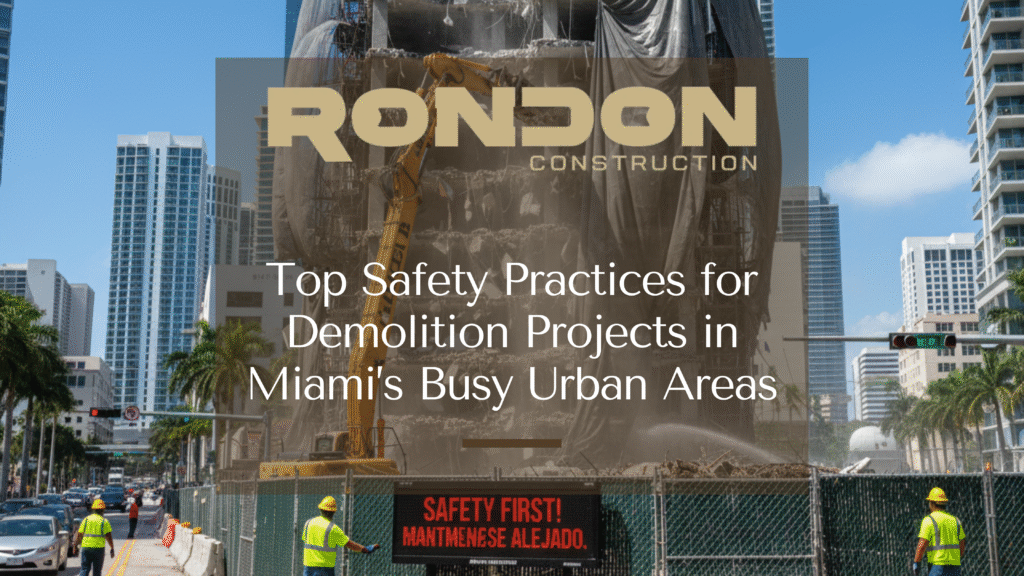
Because Miami’s urban demolition projects often occur near busy streets, schools, businesses, or residential areas, perimeter security is crucial.
Effective access control measures include:
- Temporary fencing to keep unauthorized individuals away.
- Signage and barricades to alert the public of ongoing work.
- Designating specific entry and exit points for workers and vehicles.
- On-site security personnel or flaggers when needed.
Limiting access to trained personnel not only prevents accidents but also protects valuable equipment from theft or damage.
5. Implement Dust and Debris Control Measures
Urban demolitions can produce a significant amount of dust, debris, and airborne particles that can impact public health and the environment. In a humid city like Miami, proper dust control is especially important to maintain compliance and community trust.
Best practices include:
- Water spraying systems to suppress dust during active demolition.
- Debris chutes and netting to control falling materials.
- Covered trucks when transporting debris off-site.
- Installing air quality monitoring systems when working near sensitive areas like schools or hospitals.
These steps protect workers, pedestrians, and nearby properties while maintaining good air quality standards.

6. Use the Right Equipment and Maintain It Properly
Heavy machinery is often required for demolition, and using the right equipment for the job enhances both efficiency and safety. Common tools include excavators, hydraulic hammers, skid-steer loaders, and cranes.
To ensure safe operation:
- Conduct daily equipment inspections before use.
- Schedule regular maintenance to prevent breakdowns.
- Ensure all operators are certified and trained.
- Use personal protective equipment (PPE) for all crew members working near active machinery.
In Miami’s busy neighborhoods, where space can be tight, equipment must also be positioned and operated strategically to avoid damage to surrounding structures.
7. Prioritize Worker Training and PPE Compliance
Even the best safety plans can fail without properly trained workers. Every demolition team should undergo comprehensive safety training, including:
- Correct use of PPE such as helmets, gloves, respirators, and safety boots.
- Hazard recognition and emergency response procedures.
- Equipment operation training for certified operators.
- Fall protection and confined space awareness.
- Evacuation drills and communication protocols.
Miami’s hot and humid climate can also pose risks of heat stress, so workers should be trained to recognize symptoms and follow hydration and rest schedules.
8. Manage Noise and Vibration Levels
Urban demolition isn’t just about protecting workers; it’s also about minimizing the impact on nearby residents and businesses. Miami has noise ordinances that limit work hours and sound levels, especially in residential zones.
Key strategies to manage noise and vibrations include:
- Using low-noise equipment when available.
- Scheduling high-impact tasks during approved daytime hours.
- Installing temporary sound barriers around the site.
- Monitoring vibration levels to avoid damage to nearby structures.
This not only ensures compliance but also maintains a good relationship with the surrounding community.
9. Have an Emergency Response Plan
Even with the best preparation, unexpected incidents can occur during demolition, ranging from structural collapses to equipment failures or hazardous material exposure. A well-defined emergency response plan should include:
- Clear evacuation routes for workers.
- On-site first aid kits and medical stations.
- Communication protocols with local emergency services.
- Designated safety officers to oversee crisis management.
- Regular emergency drills to keep everyone prepared.
In dense Miami neighborhoods, a rapid, organized response is critical to protect both workers and the public.
10. Prioritize Waste Management and Site Cleanup
Demolition projects generate a large amount of waste, including concrete, steel, wood, and sometimes hazardous materials. Proper disposal isn’t just good practice; it’s a legal requirement in Miami.
Steps to manage waste safely and responsibly include:
- Sorting materials on-site for recycling and disposal.
- Working with licensed waste hauling companies.
- Properly labeling and disposing of hazardous substances.
- Cleaning the site thoroughly to remove dust and debris.
Sustainable demolition practices not only improve safety but also reduce environmental impact and disposal costs.
11. Coordinate with the Community
Urban demolition often impacts surrounding neighborhoods. In a vibrant city like Miami, communication and transparency with nearby residents, businesses, and stakeholders help reduce conflicts and build trust.
Effective strategies include:
- Notifying neighbors in advance about the project timeline and expected noise.
- Providing contact information for a project liaison.
- Scheduling work to minimize disruptions to traffic and businesses.
- Post clear signage to keep pedestrians safe.
When communities feel informed, they are less likely to resist or complain about construction activities.
12. Continuous Monitoring and Safety Audits
Safety doesn’t end once the plan is in place. Regular on-site safety audits and monitoring ensure that procedures are followed consistently. Safety officers should:
- Conduct daily walkthrough inspections.
- Check for compliance with PPE, barricades, and dust suppression.
- Identify new risks as the structure comes down.
- Keep detailed incident logs for accountability.
In fast-paced demolition projects, real-time adjustments can prevent small oversights from becoming major incidents.

Conclusion: Safety Is the Foundation of Successful Urban Demolition
Demolition in Miami’s urban environment is a complex operation that requires more than brute force; it demands careful planning, regulatory compliance, and rigorous safety standards. From securing permits and controlling dust to managing equipment and training workers, each step plays a vital role in protecting lives and property.
Call to Action
By implementing these top safety practices, contractors and property owners can complete demolition projects efficiently while maintaining a strong safety record. In a city as vibrant and busy as Miami, prioritizing safety ensures smoother operations, fewer delays, and a safer environment for everyone. Contact us today!